An update on ‘smart’ and ‘self-healing’ coatings

As operating environments become increasingly severe, we continue to evaluate next-generation material science.
Right now, that means closely tracking and testing innovative ‘smart’ and ‘self-healing’ coating technologies, with a view to future project integration.
Why coatings need to get smarter
A coating’s job has always been fairly simple: put a barrier between the metal and whatever’s trying to attack it, and keep that barrier intact for as long as possible. The trouble is that conventional coatings are static. Once a surface is scratched or worn, the damage exposes the substrate beneath it until it’s discovered.
The gap between damage occurring and damage being found is often the problem, particularly in offshore and subsea applications where inspection itself is expensive, difficult, and sometimes months apart. It’s this gap that the newer generation of coatings is being designed to close.
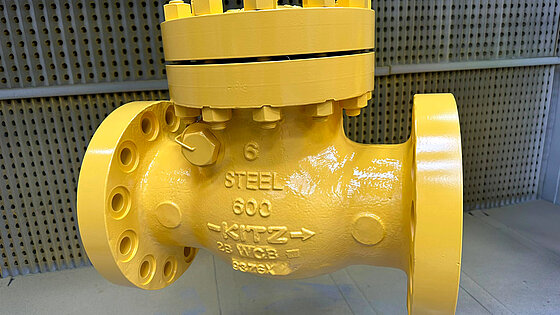
Advanced coating technologies represent a massive leap forward in valve protection, and here’s what they include.
1. Microencaped chemsulatistries
The first technology we’re testing is microencapsulated chemistry. It sounds complicated, but the principle is straightforward: the coating contains microscopic capsules filled with a healing agent. If the valve surface is scratched or damaged, the capsules around the damage rupture, releasing a resin that seals the breach.
2. Corrosion-sensing indicators
The second is corrosion-sensing indicators. These advanced formulations change colour where damage occurs, alerting maintenance crews to localised corrosion often before damage is visible to the naked eye. This gives maintenance crews the chance to act on a problem while it’s still microscopic, rather than discovering it once it’s already compromised the surface.
3. Extended service life
The third is the payoff of the first two. By autonomously managing micro-damage as it occurs, these coatings promise to drastically reduce maintenance intervals in offshore and subsea applications – environments where every intervention carries a real cost in time, access and risk to personnel.
Where RPV is with ‘smart’ and ‘self-healing’ coatings
Material changes like this need proper scrutiny, and right now we’re at the evaluation and testing stage. What we can say is that we’re following ‘smart’ and ‘self-healing’ coatings closely, testing where we can, and building the relationships with suppliers that mean we’ll be ready to bring it into projects as soon as it’s to a proven standard.
Get in touch
If you’d like to be kept in the loop as this develops, or want to talk through how coating specification affects your project today, get in touch with our team. We’re always happy to talk through where the technology is heading, and what it could mean for your next order.